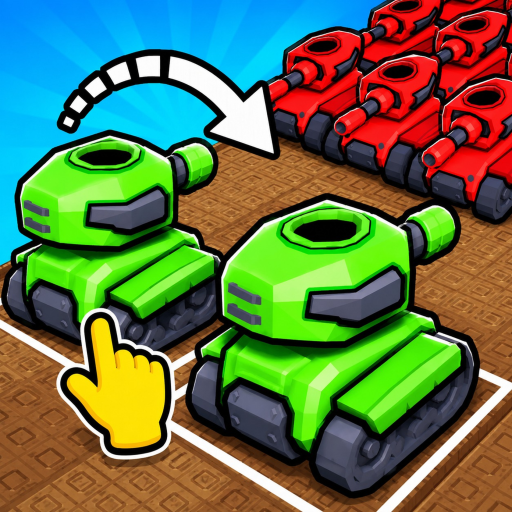
Merge a Tank Tank Merging: Match, Combine, and Progress
Merge a Tank tank merging shows how matching units become stronger tanks, how to organize the board, and what values to verify in game.
This merge a tank tank merging gives you a practical route through the exact player task without pretending that update-sensitive prices, rates, or rankings are settled. Use the confirmed mechanics first, then verify every changing value in the live Roblox experience before you spend.
Open the official Roblox experience to verify live prices, labels, requirements, and results before acting on an update-sensitive detail.
The following gameplay video is useful for seeing the purchase, matching, battle, and cash loop in motion. Treat its exact values as recording-specific observations.
Use this quick check before the next action:
- Confirm the matching units or visible objective.
- Check whether the base still has enough coverage.
- Read the current cost or effect in the live interface.
- Keep a reserve when the next requirement is unknown.
The matching rule that drives progress
The confirmed action is straightforward: combine matching tanks to create a stronger version. Current gameplay footage demonstrates two equal starter units becoming the next level, then repeats the pattern as stronger units are purchased and produced.
The important word is matching. Check the visible level, appearance, or other equality cue in the live interface before dragging. Do not assume two similarly colored tanks are compatible, and do not rely on a tier formula copied from another Roblox experience.
Organize the board before combining
Keep equal units close enough to recognize while leaving deployed defenders in useful positions. A tidy board reduces missed pairs and makes it easier to decide whether the next purchase completes a merge or merely creates another unmatched piece.
Pause after a new unit appears. Scan every existing unit, identify the lowest complete pair, and decide whether merging that pair would weaken your active defense. If it would, wait until a replacement is ready instead of combining automatically.
| Check | How to use it |
|---|---|
| Observe | Read the current board, battle pressure, and visible balance |
| Decide | Choose one matching, spending, or defense action with a clear purpose |
| Verify | Confirm the result in the live interface before repeating |
Turn each stronger tank into a decision
A merge is not the end of the loop. Decide whether the new tank should defend immediately, remain available for another match, or support the next cash objective. Recorded play shows stronger merged units improving combat output, but exact values vary by unit and may change.
Use visible results rather than assumed rankings. Watch whether enemies are cleared comfortably, whether the base takes pressure, and how quickly cash returns after the merge. Those observations tell you more than an unsupported universal tier list.
Used this way, the merge a tank tank merging stays tied to visible outcomes: one decision, one result, and one live verification before the next spend or merge.
Connect purchasing, spawning, and merging
Purchasing supplies units for matches. Recorded gameplay also shows spawn-level progression producing higher-level starting units, but the available evidence does not establish permanent costs or requirements. Check the current upgrade panel before deciding between more units and a better source tier.
A practical sequence is to complete an obvious pair, deploy the stronger result, collect the next cash, and reassess the board. This keeps each spend tied to a visible merge outcome instead of filling space with unmatched tanks.
Version checks and common errors
Do not quote a cost, damage value, tier ceiling, or named roster unless the live interface confirms it. Videos are useful for seeing the interaction, but update-sensitive numbers should be treated as observations from their recording, not permanent rules.
The safest habit is to verify the two source tanks, the previewed result when available, and the defense impact before releasing the drag. If the interface rejects the merge, separate the units and recheck their level rather than forcing random combinations.
A useful practice drill is to stop purchasing for one minute and identify every possible pair already on the board. Mark which tanks are actively defending, which pair can be combined safely, and where the result should be placed. Then perform only that merge and observe a complete enemy cycle. This teaches board reading without requiring a fixed price or stat table.
When several pairs exist, start with the merge that produces a clear battle improvement while preserving coverage. A lower pair may be safer than combining two of the best deployed tanks at once. Current footage demonstrates progression through repeated equality checks, but it does not establish a permanent mathematical optimum. Your defense state is part of the decision.
Board space is another practical signal. Several unmatched units can make valid pairs harder to see and can tempt rapid purchases that do not solve the current fight. Before adding a tank, trace the intended path from purchase to pair, from pair to stronger result, and from result to deployment. If one link is missing, keep the cash and wait for a clearer move. This is especially useful when the live shop or spawn system has changed since a recording was made.
The merge a tank tank merging also works as a troubleshooting method. If progress stalls, ask whether the board lacks pairs, the shop cost is out of reach, the defense is unstable, or a visible upgrade changes the starting unit. Each answer points to a different action and prevents random spending.
You can also compare two merge candidates without using unsupported numbers. Ask which pair is already off the battle line, which result can fill a weak position, and which choice leaves another near-pair ready. These are visible, version-resistant criteria. They do not claim a secret multiplier or best tank, and they force the decision to match the current board rather than a generic tier list.
Finally, keep a short observation log after major merges: source units, displayed result, placement, and whether the next fight became easier. Do not publish a recorded damage number as timeless data, but do use the comparison to guide your own next move. That is the difference between evidence-aware strategy and a copied tier claim.
When a merge fails, do not assume the game is broken. Recheck that both units are truly equal, that neither is locked into an action the current interface prevents, and that you are using the active drag or merge control. If the same valid pair still fails after the session loads fully, record what is visible and use the creator-owned support links. Avoid destructive account steps or any advice that asks for credentials.
On mobile or smaller screens, slow the interaction down and confirm the selected source before releasing it over the target. The underlying rule is still matching equal tanks, but input feedback and board visibility can feel different across devices. A deliberate drag, a quick result check, and immediate redeployment are safer than chaining several gestures without watching what the game accepted.
FAQ
How do you play the merge game?
Start with the official buy, merge, battle, cash, and defense loop, then confirm the current interface for any price, requirement, or label. Recorded gameplay can demonstrate actions but does not freeze future values.
Is this merge a tank tank merging still accurate after an update?
The broad claims come from the official experience and target-game observations checked on 2026-08-07. Recheck update-sensitive values and menu locations in the live game.
Where should I verify a changing value?
Use the live Roblox experience first, then creator-owned links for announcements. Avoid transferring mechanics, codes, or numeric tables from another game.